Overview
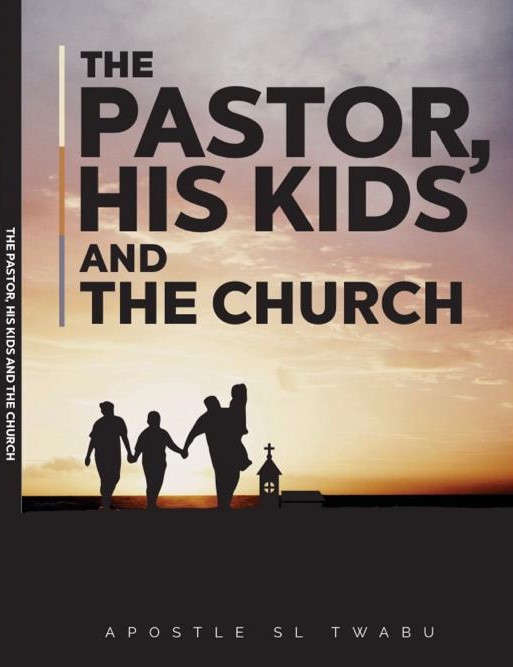
Apostle S.L. Twabu’s The Pastor, His Kids and The Church is a compassionate, candid examination of the rarely-talked-about dynamics that form at the intersection of pastoral ministry and family life. Written from the vantage point of someone steeped in ministry culture, the book explores how pastoral vocation shapes — and sometimes strains — the lives of pastors’ children, and how congregations can either support or unintentionally harm those young lives. With pastoral sensitivity and practical insight, Twabu illuminates the lived reality behind the pulpit, asking the church to consider the children who grow up in its shadow.
Central Themes
Identity and Formation
The book addresses how growing up as a pastor’s child influences personal identity. It looks at the tension between private self and public role, the expectations placed on children to “perform” spirituality, and the long-term effects on faith formation and self-esteem.
Expectations and Pressure
Twabu examines explicit and implicit expectations — from congregants, church leadership, peers, and even family members — that can create pressure to meet spiritual standards or represent the church in particular ways. The narrative clarifies how well-meaning expectations can become burdensome.
Boundaries and Privacy
A recurring theme is boundaries: what should be public knowledge about a pastor’s family, and what must remain private for healthy family functioning. The book recommends practical ways churches and pastors can establish and maintain boundaries that protect children’s emotional and spiritual development.
Grief, Conflict and Hypocrisy
Twabu doesn’t shy away from the difficult: how public scrutiny magnifies family struggles, how unresolved conflict within a pastor’s household can become subject to gossip, and how the dissonance between public persona and private reality affects everyone involved.
Support Systems and Best Practices
Importantly, the book offers solutions: mentorship for pastors’ kids, pastoral family care policies, child-centered discipleship, and healthy leadership practices that prioritize family wellbeing alongside congregational needs.
Structure and Approach
Twabu’s writing blends theological reflection with real-world examples and pastoral counsel. Rather than presenting a purely academic treatise, the book reads like a pastoral handbook: grounded in Scripture, informed by ministry experience, and practical in its application. Each chapter tackles a specific facet of life for pastors’ kids — from education and friendship to sexuality, social media, and vocational choices — often ending with reflective questions or concrete steps for families and churches to implement.
Key Takeaways
Children Need Space to Be Children. One of the book’s clearest messages is that pastors’ kids must be allowed to develop away from constant ministry demands and public performance.
Congregations Have Responsibility. Churches are called to protect and nurture pastor’s families, not to treat them as church “property” or perpetual examples.
Healthy Leadership Requires Self-Care. Pastors and ministry leaders are encouraged to model self-care, delegate responsibilities, and resist the temptation to let ministry consume family life.
Intentional Discipleship Over Assumption. The spiritual formation of a pastor’s children should be intentional and age-appropriate, rather than assumed as automatic because of proximity to ministry.
Who Should Read This Book
Pastors and ministry leaders who want to safeguard their families and build sustainable ministry practices.
Pastors’ spouses and children seeking language for their experiences and practical coping strategies.
Church elders and boards who shape policies affecting pastoral families.
Youth workers, counselors, and Christian educators who minister to or with pastors’ children.
Congregants who genuinely want to understand how their attitudes and actions affect the pastor’s household.
Practical Recommendations (What the Book Encourages Churches to Do)
Establish a pastoral family care policy that defines boundaries, confidentiality, and roles.
Provide accessible counseling and mentorship for pastors’ children (and parents).
Rotate public responsibilities so that the pastor’s family can enjoy anonymity and rest.
Educate congregations about pastoral family realities through workshops and sermons.
Encourage pastors to pursue sabbath, family retreats, and time away from visible ministry to recharge relationally and spiritually.
Discussion Guide — Questions for Small Groups or Church Boards
In what ways does our congregation implicitly expect the pastor’s family to “represent” the church? Are those expectations fair?
What practical steps can we take to protect the privacy and wellbeing of pastors’ children?
How does our church currently support pastoral families during crises (health, grief, conflict)? What gaps exist?
How can the church balance honoring its leaders publicly while safeguarding their family life privately?
What training or resources could we supply to children of ministers to support healthy identity formation?
Strengths and Constructive Observations
Twabu’s greatest strength is pastoral empathy — the ability to name painful realities without judgment and offer practical pathways forward. The book is accessible, theologically grounded, and sensitive to cultural variance. Readers seeking empirical studies or sociological data might wish for more research citations; however, the book’s pastoral anecdote-driven approach will likely resonate deeply with practitioners and families in ministry.
Practical Applications for Families
Create a family covenant that clarifies media, privacy, and ministry involvement.
Practice regular family rhythms (meals, devotions, recreation) that prioritize internal bonding over external duties.
Teach children how to set boundaries with well-meaning congregants.
Normalize receiving help — from counseling to mentorship — without shame.
Final Reflection
The Pastor, His Kids and The Church stands as a heartfelt call for the church to see and serve those standing behind the pulpit. Apostle S.L. Twabu invites readers into a compassionate conversation: ministry is noble, but it is not cost-free to families. The book urges churches to shift from assumption to intentional care, ensuring that the children of those who lead are not invisible casualties of spiritual labor but nurtured members of the faith community.
For any congregation or ministry leader seeking to build sustainable, healthy church life, Twabu’s book is both timely and necessary — a manual for grace that equips the church to love its leaders by first loving their children well.